
The upcoming PPWR (Packaging and Packaging Waste Regulation) is often discussed in terms of risk: stricter requirements, restrictions, deadlines and compliance pressure. Understandably so, the regulation reshapes the playing field in our industry. But viewing the PPWR only as an obstacle overlooks a crucial insight: regulation does not merely impose boundaries, it also creates opportunity.
The PPWR forces a large part of the market to change. As with any mandatory transition, there is room for suppliers who don’t wait for movement but instead proactively seize opportunities. Companies that provide clarity, direction and practical solutions will quickly become the preferred supplier.
This article outlines four strategic opportunities forward-thinking packaging suppliers can capture, opportunities that not only align with the PPWR but also strengthen and future-proof your business.
1. A PPWR-ready portfolio as a strategic advantage
In the coming years, certain packaging materials will face increasing pressure. Not because they fail functionally, but because they no longer fit the European framework for reuse, recyclability and material reduction.
For suppliers, this presents a clear opportunity: those who can offer a portfolio that remains viable in the future become more than a supplier of packaging, they become a partner that provides certainty.
This requires two parallel steps:
- Actively developing and scaling alternatives: don’t wait for 2030 but ensure customers can transition now, without strategic friction.
- Explaining clearly why these alternatives are future-proof: not through marketing slogans but grounded in the logic of the PPWR and its underlying objectives.
Ultimately, customers want an answer to one question: “Can I rely on this material for the next decade?”
Those who can answer this convincingly and with evidence gain a powerful commercial advantage.

2. Transparency and data as the foundation of trust
The PPWR is not only about materials, it is about proof.
Recyclability, reuse potential, material flows and CO₂ impact all require increasingly detailed documentation.
For many organisations, this is complex territory. This is why there is a growing need for suppliers who can provide:
- Life Cycle Assessments (LCAs)
- material profiles
- comparison tools that highlight environmental and performance differences
By making this information accessible, complete and easy to interpret, you remove much of the uncertainty. This is where trust is created.
Instead of simply supplying the right material, you help organisations make the right decision, which elevates the relationship to a higher level.
Suppliers who deliver this level of transparency quickly become the preferred supplier.
Get in touch
Interested in what Axxor can do for you? Let’s talk.
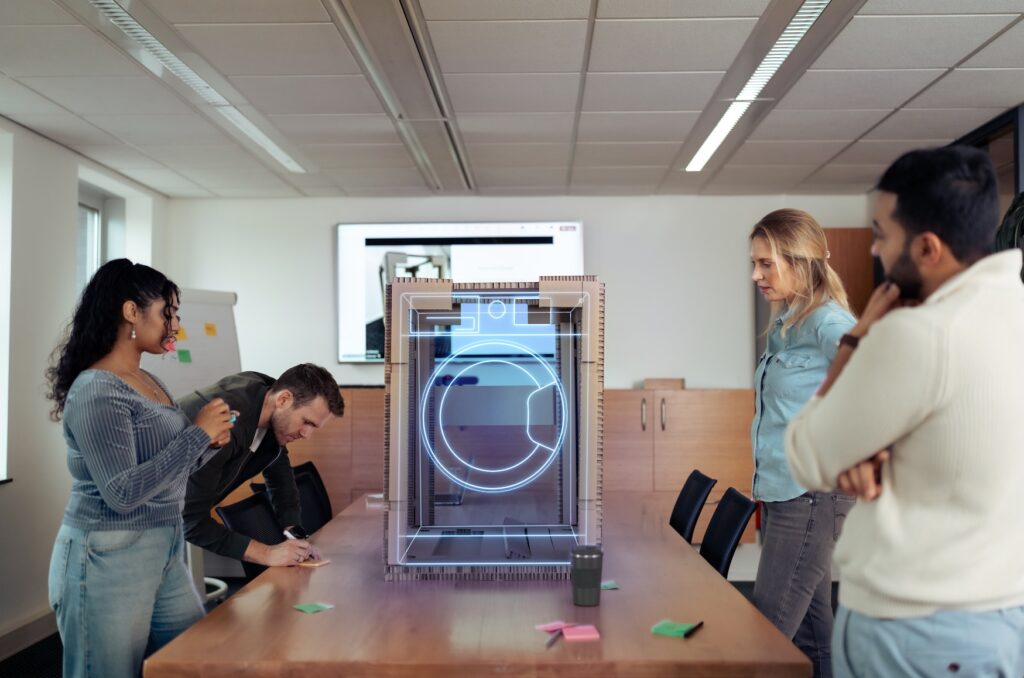
3. Becoming a design partner rather than a traditional supplier
The PPWR affects more than materials. It influences packaging design.
Many packaging concepts will need reassessment, some even complete redesign. This creates a significant opportunity for suppliers who are willing to bring their expertise into the design process.
Examples include:
- contributing to design for recycling and material reduction
- advising on component choices that affect recyclability
- supporting process adjustments required to integrate alternative materials efficiently
- developing hybrid solutions that meet PPWR requirements without compromising functionality
Companies are looking for partners who can look beyond their own product line and help improve the entire system.
Suppliers who guide customers through this transition, from design to production, increasingly become strategic partners.
4. Position yourself visibly as PPWR-ready and future-focused
In the coming years, businesses will actively look for suppliers who provide certainty in a period of regulatory change. Not out of fear for the PPWR itself, but because the risks of choosing the wrong material or design are substantial. Packaging choices often involve long-term investments in tooling, machinery and production processes.
For suppliers, this means it is essential to:
- communicate clearly how your portfolio aligns with the PPWR
- show that documentation and data are readily available
- share cases where customers have already transitioned successfully
- actively discuss what the PPWR means for each customer’s situation
This is not a marketing trick. It is a form of leadership.
By demonstrating that you are PPWR-ready, you offer stability in a period where many organisations are seeking direction.
Conclusion: The PPWR is not a burden, but a strategic momentum
The PPWR will reshape our industry. Like any structural change, it creates competitive advantage for those who move faster, communicate clearer and think further ahead than the rest.
Packaging suppliers who:
- future-proof their portfolios
- provide transparent data
- guide customers through design and implementation
- show visible leadership
will not only comply with the PPWR, they will grow through it.
Rather than a regulatory burden, the PPWR becomes a catalyst for innovation, stronger customer relationships and market differentiation.

Was this article helpful?